.png)

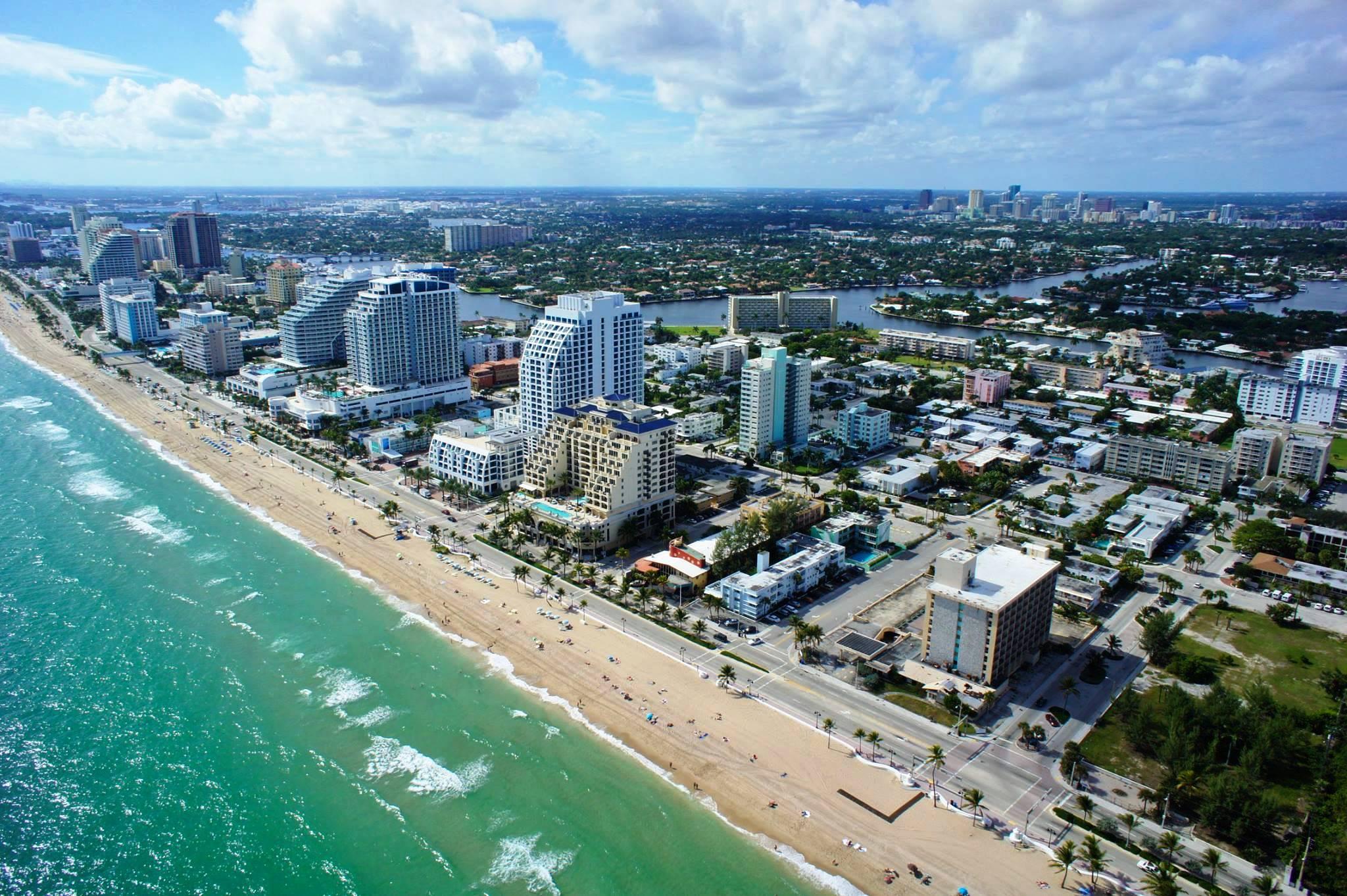
For years, Fort Lauderdale existed in Miami’s shadow. It was the quieter neighbor — great beaches, nice restaurants, good boating, but never quite the main event. That narrative is dead. What’s happening in Fort Lauderdale right now isn’t a gradual evolution. It’s a full-scale transformation that is repositioning this city as one of the most compelling luxury real estate markets in the entire country.
And the smartest buyers and investors are paying attention.
If you want to understand where Fort Lauderdale is headed, look no further than the St. Regis Resort and Residences at Bahia Mar. Related Group, Tate Capital, and Rok Acquisitions are collaborating with Marriott International on a $2 billion, 40-acre waterfront development that has been described as a mini Monaco rising on the Intracoastal.
The project will feature two 23-story residential towers with just 80 residences each — only four homes per floor — alongside a 197-key St. Regis hotel, 88,000 square feet of waterfront retail and dining, a megayacht marina accommodating vessels up to 350 feet, a private beach club, and a 25-foot-wide pedestrian promenade along the Intracoastal Waterway. Residences are priced from $3 million to $25 million, and the development is already attracting buyers from South Beach, California, Chicago, Sarasota, and Naples.
Fort Lauderdale’s mayor has called the project a game-changer, emphasizing that the city is forging its own distinct identity rather than competing to be another Miami or Palm Beach. That philosophy captures what makes Fort Lauderdale’s trajectory so powerful — this city is building its own luxury narrative, not chasing someone else’s.
The St. Regis is the flagship, but it’s far from the only project reshaping Fort Lauderdale’s skyline. The development pipeline currently includes some of the most prestigious hospitality brands in the world, and 2026 is widely regarded as the inflection year — the moment when Fort Lauderdale’s luxury product permanently levels up.
Multiple branded towers are reaching completion or nearing delivery across Broward County: Rosewood Hillsboro Beach, Waldorf Astoria Pompano Beach, Ritz-Carlton Pompano Beach, and Sage Intracoastal. Coming behind them are developments like Andare Residences on Las Olas Boulevard — designed by Pininfarina, the legendary Italian design house known for their work with Ferrari — Ombelle in downtown Fort Lauderdale, Riva Residenze, and a Four Seasons Hotel and Private Residences slated for Fort Lauderdale Beach.
This wave of branded residential product is something Fort Lauderdale has never seen before. And it matters because branded residences typically command a 25 to 35 percent premium over comparable non-branded properties, and they tend to hold value better and appreciate faster. Fort Lauderdale is rapidly closing the gap with Miami in branded residential inventory — while offering lower entry prices and significantly less density.
Fort Lauderdale’s transformation isn’t just about luxury condos. The economic fundamentals driving this market are exceptionally strong. The city’s job market is growing faster than the national average, with nearly 200 companies headquartered locally and projected job growth of 38% over the next decade. The median household income is approximately $88,800 — and remember, Florida has no state income tax.
Broward County recorded a 93% year-over-year spike in office sales in 2025, the greatest growth in South Florida. That surge was fueled by deals like the $221 million acquisition of Bank of America Plaza at Las Olas City Centre — the second-highest office deal in the entire tri-county region last year. Meanwhile, Miami-Dade’s office deal volume actually declined by nearly 26%. The corporate capital is following the same trajectory as the residential market: increasingly bullish on Fort Lauderdale.
Developments like the T3 FAT Village mass timber office project and the broader redevelopment of neighborhoods like Flagler Village, FAT Village, and Progresso Village are creating a new kind of urban core — walkable, design-forward, and attractive to the creative and tech-adjacent professionals who drive modern economies.
Here’s the insight that sophisticated investors understand: Fort Lauderdale is roughly 12 to 18 months behind Miami’s luxury development delivery wave. That lag is not a disadvantage — it’s a positioning advantage.
Buyers entering Fort Lauderdale’s pre-construction market today are accessing branded residence product at entry prices that Miami passed through two to three years ago. As Miami’s ultra-luxury market continues to compress at the top end — with price-per-square-foot records being set regularly and pre-construction developments projecting $4,500 to $11,000 per square foot — Fort Lauderdale offers substantially more space, more privacy, and more value per dollar.
The lifestyle proposition is different, too. Fort Lauderdale gives you 23 miles of beach, world-class boating and marina infrastructure (it is, after all, the yachting capital of the world), a genuinely walkable downtown centered on Las Olas Boulevard, and a cultural scene that has quietly become one of the most vibrant in Florida. And you get all of that without the congestion, the attitude, or the price premium of Miami.
The development community — the people who stake hundreds of millions of dollars on market bets — has spoken clearly. Related Group, Tavistock, and other institutional developers are deploying serious capital into Fort Lauderdale. That level of institutional confidence doesn’t happen on a whim. These firms see the same data, the same migration patterns, and the same demographic tailwinds that make Fort Lauderdale one of the most asymmetric opportunities in American real estate.
For individual buyers, the math is straightforward. Fort Lauderdale’s single-family market remains anchored, with steady demand keeping inventory relatively tight. The condo market is expanding with unprecedented quality and brand pedigree. And the broader South Florida wealth migration — which is projected to continue for another 15 years or more — ensures sustained demand across all segments.
Fort Lauderdale isn’t becoming the next Miami. It’s becoming the best version of itself — and for buyers and investors who see that early, the opportunity is extraordinary.
Connect with Omar Elsehrawy for exclusive insights on Fort Lauderdale’s luxury market, pre-construction opportunities, and investment strategy. I specialize in helping buyers navigate this market with the depth and precision it demands.





.webp)